Travel becomes much more interesting to me when a city is not treated simply as a collection of landmarks. A cathedral is also evidence of religious institutions, accumulated capital, technology, and political authority. A medieval city gate tells us something about security and collective organization. A stock exchange reveals another stage in the development of commerce. Even the location of a city may help explain why it became wealthy, politically important, or repeatedly contested. Seen this way, traveling through Europe can become a form of reading history in physical space.
This journey took me from the southern edge of the Alps through northern and southern Italy, Sicily and Malta, and then toward Barcelona, southern France, and Milan. What made the route particularly interesting was the extraordinary historical range compressed into a relatively small geographical area. Within one journey, I encountered the remnants of Greek colonization, Roman urban civilization, medieval commercial republics, Renaissance art, Baroque monarchy, the Age of Exploration, nineteenth-century nationalism, and the emergence of modern commercial cities. These layers did not replace one another neatly. They remain physically superimposed upon the same cities, sometimes even within the same building.
The First Day: Lugano and the Italian Switzerland
My first substantial stop was Lugano, in the Swiss canton of Ticino. The immediate impression is slightly disorienting in a productive way. Politically, one is unquestionably in Switzerland; culturally, much of the surrounding environment remains closely connected to Lombardy and northern Italy. Italian is the principal language, the architecture reflects centuries of exchange across the southern Alps, and the landscape itself seems to resist the clean borders found on modern political maps. Lugano therefore offers a useful reminder that the boundaries of states and the boundaries of civilizations are rarely identical.
It is also important to correct a historical misconception that can easily arise when visiting this region. Lugano did not become Swiss because Italy lost the Second World War. The territories that form modern Ticino had entered the political orbit of the Swiss Confederacy centuries earlier, while the modern canton was established in the Napoleonic period. Indeed, Lugano had been connected politically to Switzerland long before a unified Kingdom of Italy existed. The persistence of Italian language and culture therefore illustrates something more interesting than a twentieth-century territorial transfer: political sovereignty can change while linguistic and cultural continuities survive for centuries.
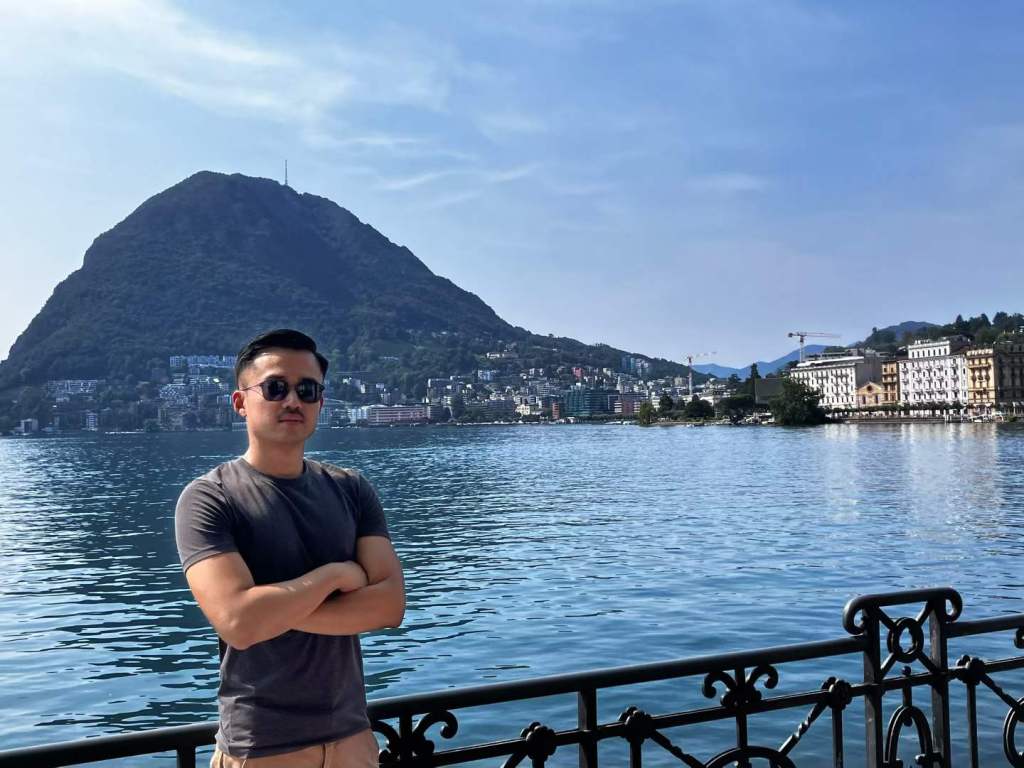
The landscape is dominated by Lake Lugano, which extends across both Switzerland and Italy. Mountains descend sharply toward the water, while settlements occupy the narrow space between the lake and the Alpine slopes. It produces a visual environment quite different from the stereotypical image of northern Switzerland. The combination of Alpine geography and southern European culture is precisely what makes Ticino distinctive.
One of the most rewarding buildings I visited was Santa Maria degli Angioli. The church itself is relatively restrained, particularly when compared with the spectacular Baroque churches encountered later in the journey. Its great surprise is inside: the monumental Passion and Crucifixion fresco by Bernardino Luini, a Lombard Renaissance painter strongly associated with the artistic world influenced by Leonardo da Vinci. The contrast is memorable. A comparatively modest Franciscan exterior contains an extraordinarily ambitious Renaissance narrative. It was an early reminder during this trip that architectural scale and artistic significance are not necessarily the same thing.
The Second Day: Turin and the Architecture of Political Power
Turin presents an almost opposite urban experience. Where Lugano reflects the ambiguity of a borderland, Turin communicates political order. Its broad avenues, arcades, formal squares, and palaces reflect its history as the center of the House of Savoy. In the nineteenth century, this political inheritance acquired a much larger significance when Turin became the first capital of the unified Kingdom of Italy. Long before its twentieth-century association with Fiat and industrial capitalism, Turin was therefore a city of dynastic power and state formation.
The Royal Palace of Turin makes this history immediately visible. Its Baroque architecture expresses the increasingly sophisticated court culture of the Savoy dynasty, while the surrounding royal complex reveals how political authority once organized the city around itself. Nearby, Palazzo Madama is even more fascinating from the perspective of architectural history because it contains several historical periods within the same structure. Roman remains, a medieval fortress, and Filippo Juvarra’s monumental Baroque facade coexist within a single building. It is difficult to find a better physical illustration of how European cities accumulate institutions rather than simply replacing them.
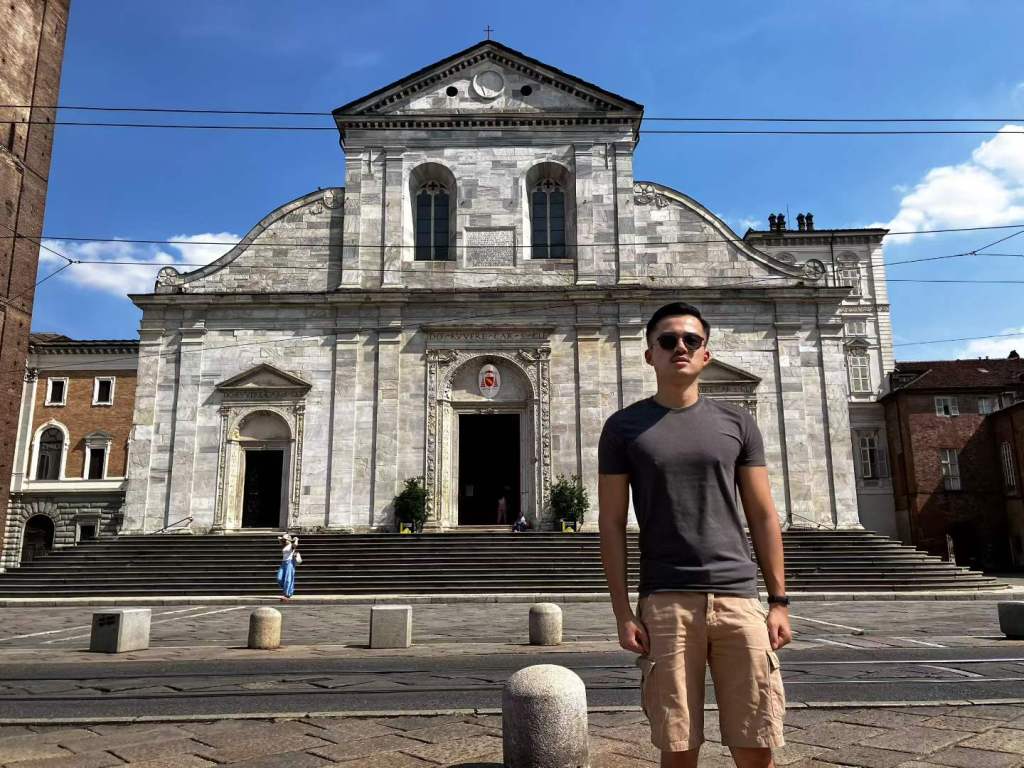
The religious center of this part of Turin is the Cathedral of Saint John the Baptist, associated internationally with the Shroud of Turin. Christian tradition holds that the linen cloth may have wrapped the body of Jesus after the Crucifixion, although its authenticity remains historically and scientifically disputed. For me, the distinction matters: a religious tradition should be described respectfully as a religious tradition without turning an unresolved historical question into an established fact. What is beyond dispute is the extraordinary cultural influence of the Shroud and its long association with the Savoy dynasty and Turin.
Architecturally, I found the Chapel of the Holy Shroud even more interesting. Guarino Guarini transformed geometry, stone, and light into a distinctly Baroque theological experience. The dome does not behave visually like a conventional dome. Its interlocking structural elements seem to dissolve upward, carrying the eye from the darker lower surfaces toward increasing light. Baroque architecture is sometimes reduced to excessive decoration, but Guarini demonstrates why that interpretation is inadequate. At its best, Baroque architecture manipulates geometry and perception to communicate an intellectual or theological argument.
Turin also contains another historical surprise: the Egyptian Museum, one of the world’s oldest institutions devoted specifically to ancient Egyptian civilization. Nearby, an object that resembles an Egyptian monument has a completely different history. The Siccardi Laws Obelisk is a nineteenth-century monument commemorating liberal reforms that reduced ecclesiastical legal privileges in Piedmont. Its Egyptian visual vocabulary therefore conceals a modern European political meaning. In the same neighborhood, ancient civilization, Christianity, Baroque monarchy, nineteenth-century liberalism, and Italian national unification coexist within walking distance.
Genoa: Commerce Before the Modern Nation-State
If Turin can be read as a city shaped by dynastic government, Genoa is better understood through commerce. The medieval Republic of Genoa was one of the great maritime powers of the Mediterranean. Its merchants, financiers, shipowners, and trading networks connected Europe with a much wider commercial world long before the emergence of the modern Italian nation-state. The physical form of the old city still reflects this history. Genoa’s narrow caruggi, steep passages, dense buildings, and unexpectedly grand palaces feel very different from Turin’s planned avenues.
The Porta Soprana is one of the strongest surviving reminders of medieval Genoese autonomy. Built as part of the city’s defensive system during the twelfth century, the gate belonged to a political world in which prosperous urban communities had to defend their own institutions and commercial independence. What appears today as an attractive medieval monument once represented a very practical economic problem: wealth attracts both exchange and predation. A commercial city therefore required institutions capable of protecting property, maintaining public works, and financing collective defense.
Nearby is the building traditionally associated with the young Christopher Columbus. The surviving structure should not be romanticized as an untouched fifteenth-century birthplace, but the connection between Columbus and Genoa is historically significant. His background also reminds us that the people who changed world history did not always emerge from royal courts. The son of a Genoese wool worker and merchant became one of the figures associated with a transformation that would eventually reorganize the world economy.
The voyages beginning in the late fifteenth century should not be reduced to the old heroic narrative of Europeans simply “discovering” a world that was already inhabited. Conquest, forced labor, demographic catastrophe, and the Atlantic slave trade formed part of the same historical process. Yet recognizing those realities does not eliminate the economic significance of what happened. Sustained maritime connections increasingly brought Europe, Africa, the Americas, and Asia into a common system of trade, monetary flows, migration, empire, and competition. The Atlantic gradually acquired an economic importance that challenged the older Mediterranean-centered commercial order.
Standing in Genoa consequently led me to think about a different historical question: why did modern industrialization ultimately emerge first in northwestern Europe rather than in other commercially advanced civilizations? China under the Song dynasty possessed sophisticated markets, large cities, extensive trade, monetary development, and important technological innovations. The lower Yangtze region again experienced substantial commercialization during the later Ming period. It is therefore legitimate to ask whether Chinese economic development might have followed another trajectory in the absence of the enormous disruptions created by the Mongol conquest and, centuries later, the Manchu conquest.
This must remain a counterfactual question rather than a predetermined conclusion. It would be intellectually careless to claim that without those conquests China would necessarily have produced the world’s first Industrial Revolution. Industrialization depended upon a complicated interaction among institutions, scientific knowledge, energy, entrepreneurship, capital accumulation, political competition, and access to expanding markets. Nevertheless, conquest and institutional disruption can alter a society’s developmental trajectory. Economic history becomes less interesting if we treat the eventual outcome as inevitable.
There is a familiar observation that an individual’s destiny depends on personal effort but also on the course of history. Something similar can be said about civilizations. Human agency matters, but choices are made within institutional and historical constraints that no individual controls. China started remarkably early in many dimensions of commercial and technological development, yet the decisive industrial breakthrough eventually occurred elsewhere. That is not an argument for historical determinism. It is precisely the opposite: history contains contingency, institutional change, interrupted trajectories, and paths that were possible but never realized.
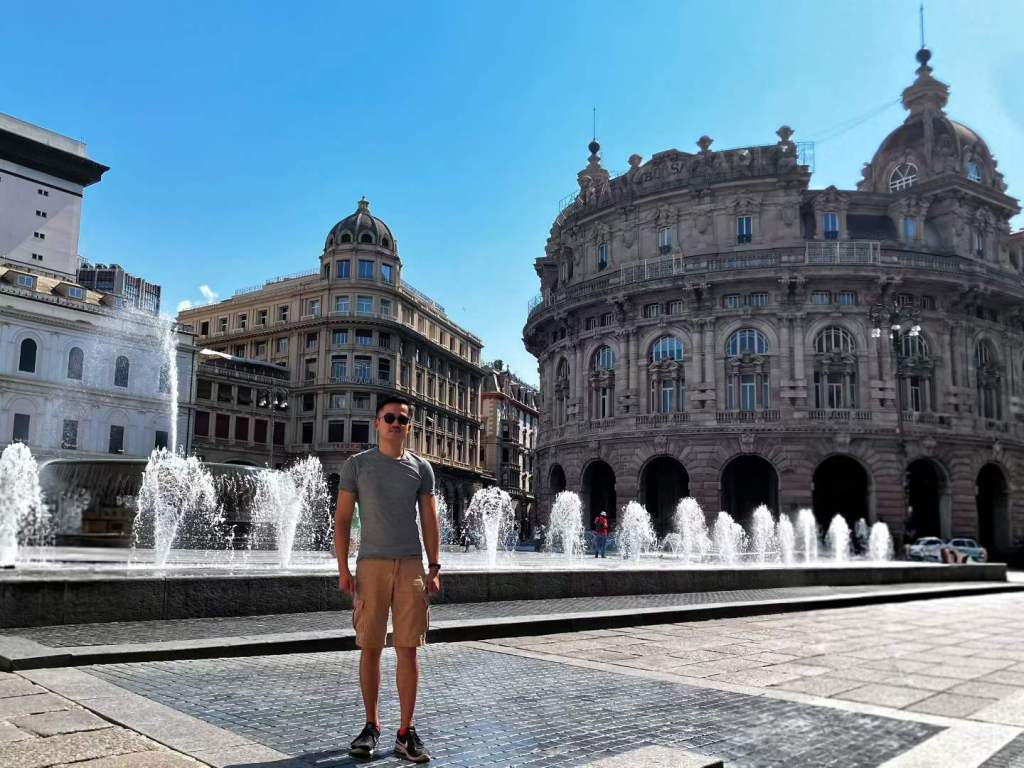
The walk eventually brought me to Piazza De Ferrari, where Genoa’s medieval commercial past gives way to the architecture of a modern financial city. The great fountain and the former stock exchange belong to a different economic world from Porta Soprana, but the transition is not as discontinuous as it initially appears. Medieval fortifications protected a commercial republic; maritime expansion created increasingly complex networks of credit and trade; banking became one of Genoa’s great historical strengths; and modern finance eventually required institutions such as securities exchanges. Walking from the medieval gate toward the financial center is therefore almost a condensed history of commercial development.
Naples and Pompeii: Rome Beyond Emperors
The next stage brought me to Naples and Pompeii, where the historical scale changed again. Pompeii is extraordinary not because it preserves the grandest monuments of the Roman Empire but because it preserves so much of ordinary Roman urban life. The eruption of Mount Vesuvius in AD 79 was a human catastrophe, yet the material that buried the city also preserved streets, houses, shops, baths, theaters, paintings, and countless traces of daily activity with an immediacy rarely found elsewhere in the Roman world.
This changes how one thinks about Rome. Imperial history is naturally dominated by emperors, armies, laws, and monumental public architecture. Pompeii instead makes it possible to imagine economic and social life at street level. People bought food, operated businesses, maintained homes, visited public baths, attended performances, worshiped, borrowed, sold, consumed, and socialized. The Roman Empire was not only a political structure imposed from above; it was also a vast network of cities in which millions of ordinary people conducted their everyday lives.
The continuing presence of Mount Vesuvius gives the archaeological site an unusual emotional power. The geographical force that destroyed ancient Pompeii remains visible on the horizon. The city therefore raises another recurring theme of this journey: economic and political institutions matter enormously, but human societies also operate within natural environments that can change their possibilities suddenly and violently.
Sicily: Where Greek and Roman Worlds Overlap
In Sicily, I encountered another layer of Mediterranean history. Modern popular culture has made the island almost synonymous with the Mafia, particularly for international audiences, but reducing Sicily to organized crime obscures the much longer and more important story of the island. Greeks, Romans, Byzantines, Arabs, Normans, Spanish rulers, and eventually the modern Italian state all left institutional, linguistic, architectural, and cultural traces there.
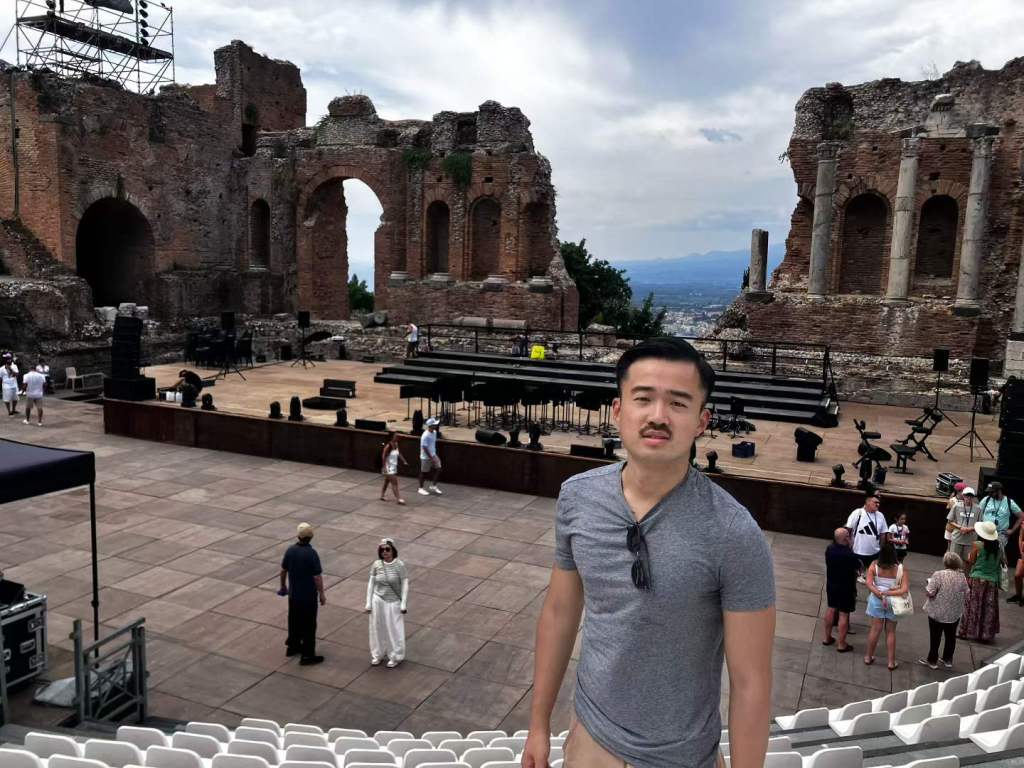
The Ancient Theatre of Taormina is perhaps the clearest example. Its origins lie in the Hellenistic period, but the Romans substantially reconstructed and expanded it. It is therefore misleading to describe the surviving structure as either simply Greek or simply Roman. The relationship between the theater and the hillside reflects the Greek architectural tradition, while much of the brickwork, arches, circulation system, and monumental stage architecture visible today reflects Roman intervention. What survives is a historical palimpsest produced by successive civilizations using and modifying the same place.
The location may be even more impressive than the architecture. Looking through the ruins toward the Ionian Sea and Mount Etna makes it possible to understand why ancient builders selected this particular site. Greek architecture often treated the surrounding landscape as part of the theatrical experience rather than as something to be excluded from it. The same sea that was visible to ancient spectators remains there today. Few experiences make two thousand years seem so short.
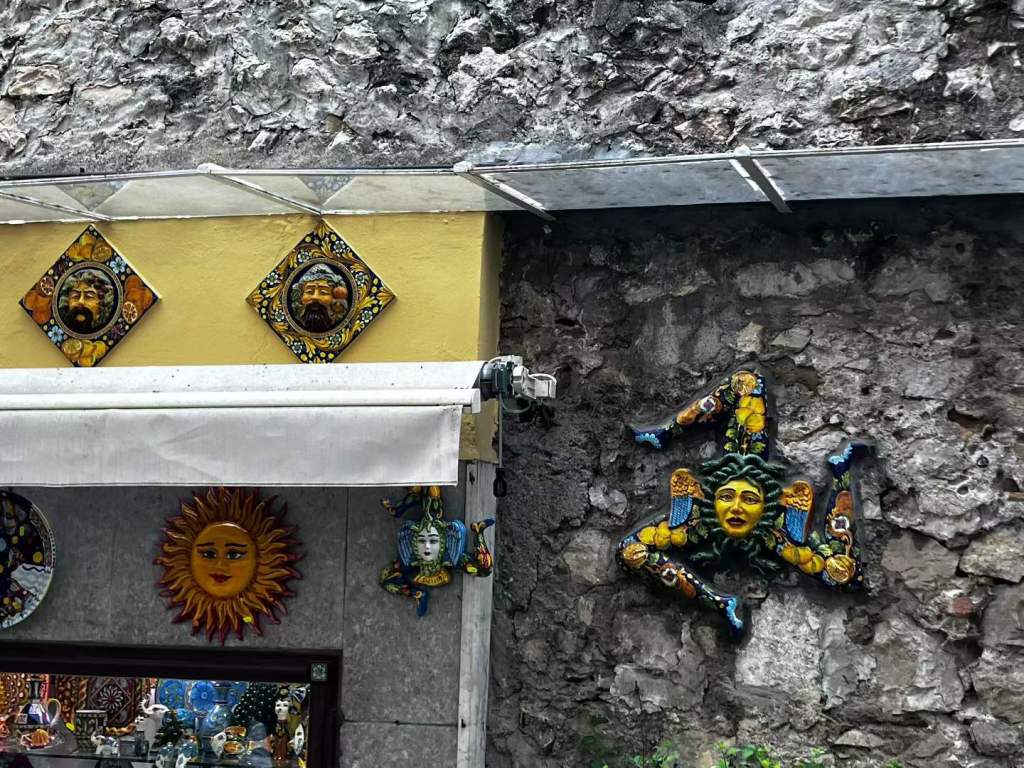
The brightly colored Sicilian ceramics photographed in the streets also deserve more than a passing mention. Their lemons, flowers, fish, geometric forms, and recurring Mediterranean imagery reflect centuries of cultural exchange. The famous Trinacria, with three bent legs arranged around a central head, has become one of Sicily’s most recognizable symbols and is traditionally associated with the island’s triangular geography and three principal capes. What tourists purchase as decorative ceramics can therefore carry a surprisingly durable expression of regional identity.
Malta: Geography as Destiny
Malta compresses an extraordinary amount of Mediterranean history into a very small territory. Phoenicians, Romans, Arabs, Normans, the Knights of Saint John, France, and Britain all played roles in its political development. The reason becomes obvious when looking at a map: Malta occupies a strategically valuable position in the central Mediterranean. Geography does not determine history mechanically, but it creates incentives that rulers, merchants, and military powers cannot easily ignore.
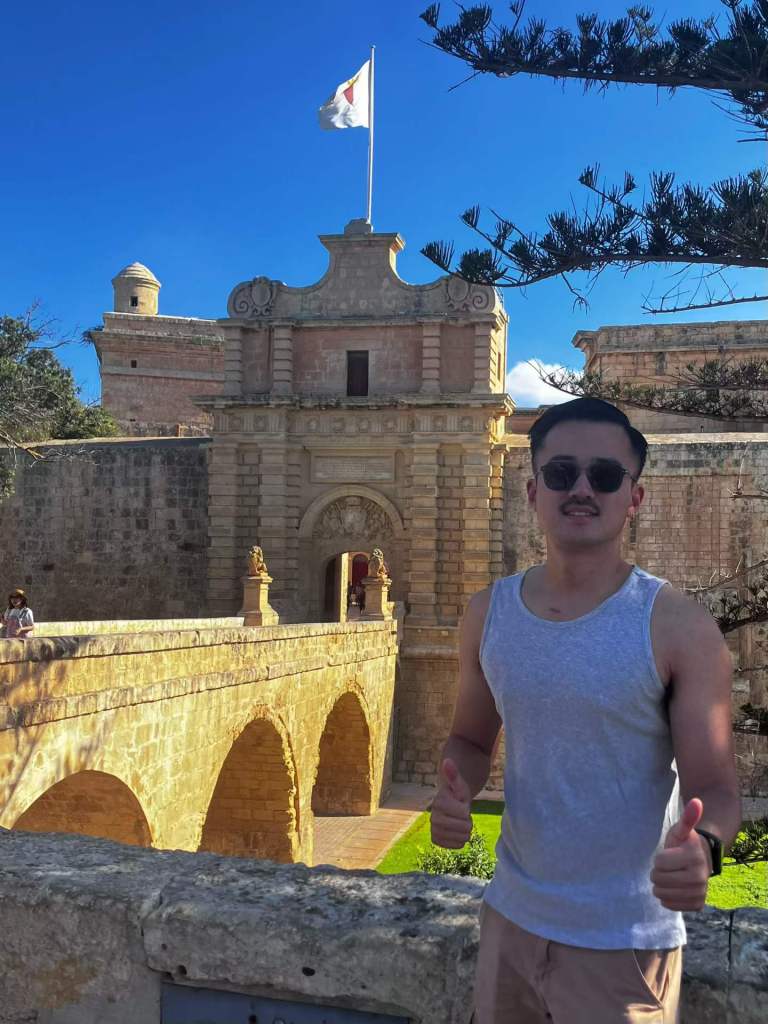
Mdina, the old fortified city, preserves this layered past particularly well. Its present appearance owes much to rebuilding and Baroque intervention during the period of the Knights of Saint John. The monumental Mdina Gate, with its heraldic decoration and controlled approach through the fortifications, combines military function with a deliberate representation of political authority. Defense architecture was never only about walls; it also communicated who possessed the legitimate power to control entry, movement, and security.
The same logic appears on a larger scale in Valletta. Following the Great Siege of Malta in the sixteenth century, the Knights of Saint John developed a new fortified city. Valletta therefore differs from medieval cities that grew incrementally over centuries. It was consciously planned around military requirements, while later Baroque churches, palaces, and civic buildings enriched the original Renaissance urban framework. From the Upper Barrakka Gardens, the relationship between city and harbor becomes obvious. The Grand Harbour is not merely scenic. It helps explain why Malta mattered strategically for centuries.
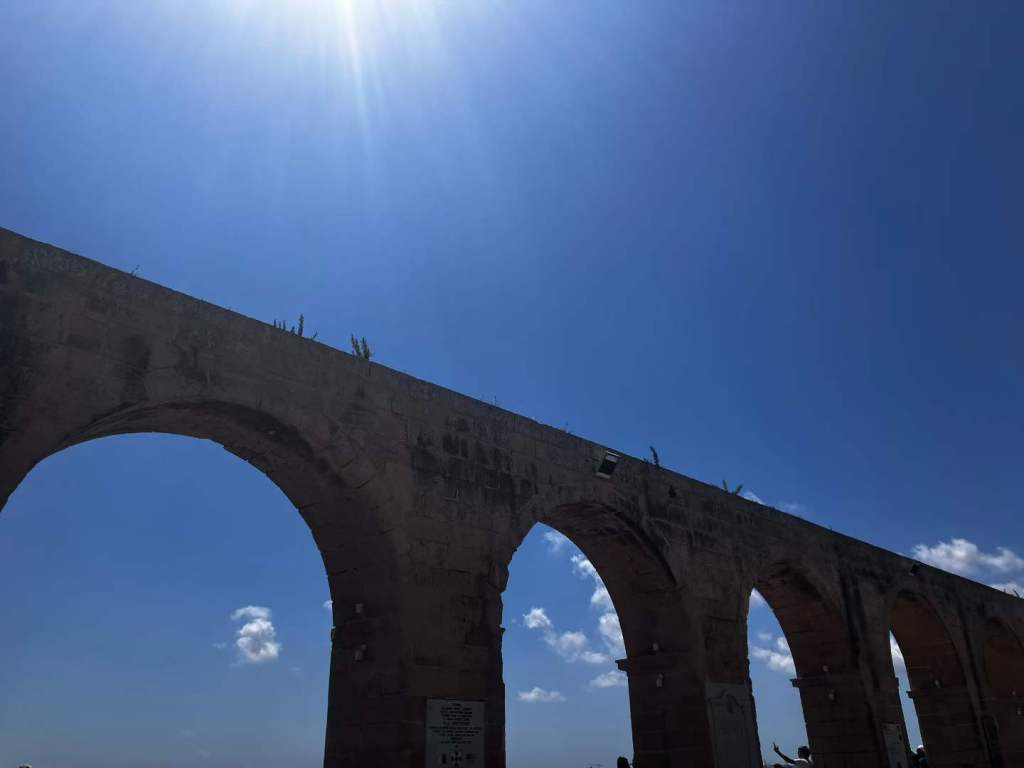
Malta consequently reinforced an idea that had already appeared in Genoa and Lugano: location influences institutional development. A port, a mountain pass, a navigable river, or an island positioned along major maritime routes can generate opportunities for trade while simultaneously creating incentives for conquest. Economic geography creates possibilities, but institutions determine how societies respond to them.
Barcelona: Gaudí and the Rejection of the Box
The journey later brought me back to Barcelona after roughly six years. Barcelona is one of those cities whose architectural identity has become inseparable from a single individual, yet describing Antoni Gaudí merely as an eccentric architect seriously understates what he was attempting to do.
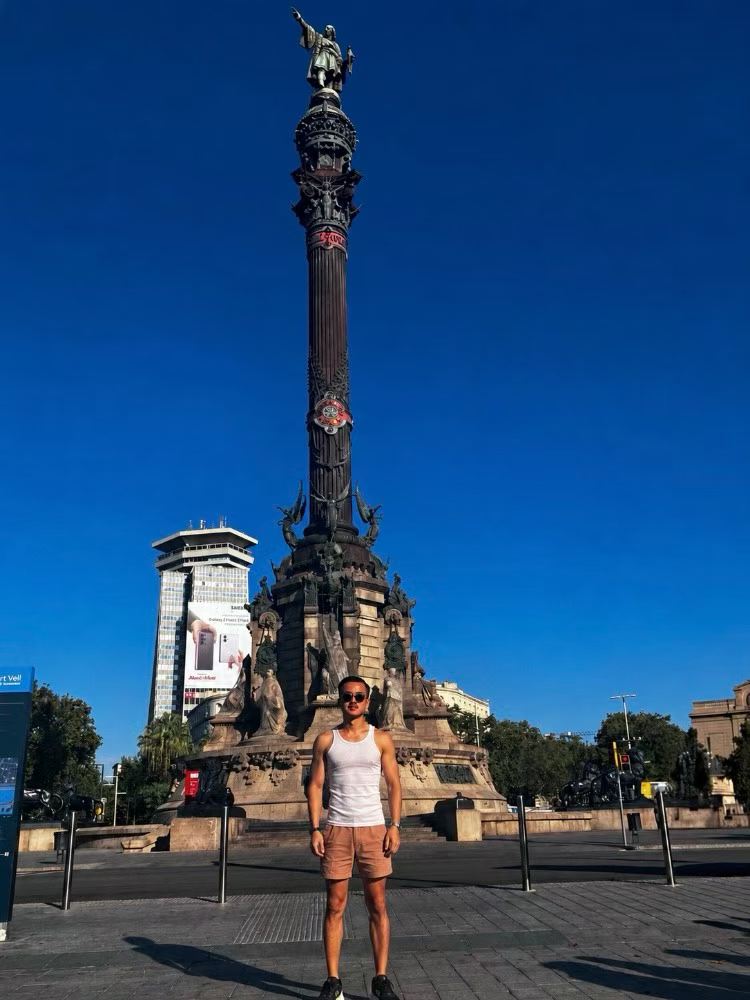
The Sagrada Família, begun in the nineteenth century and transformed under Gaudí’s direction, contains obvious connections to the Gothic tradition: verticality, religious symbolism, towers, and the ambition to produce a total sacred environment. Yet Gaudí was not simply reviving medieval Gothic architecture. He questioned some of its structural assumptions. Branching columns, ruled geometries, and forms derived from natural structures allowed him to rethink how a church could carry weight and distribute forces. Entering the interior therefore feels less like entering a conventional stone building than walking into an artificial forest.
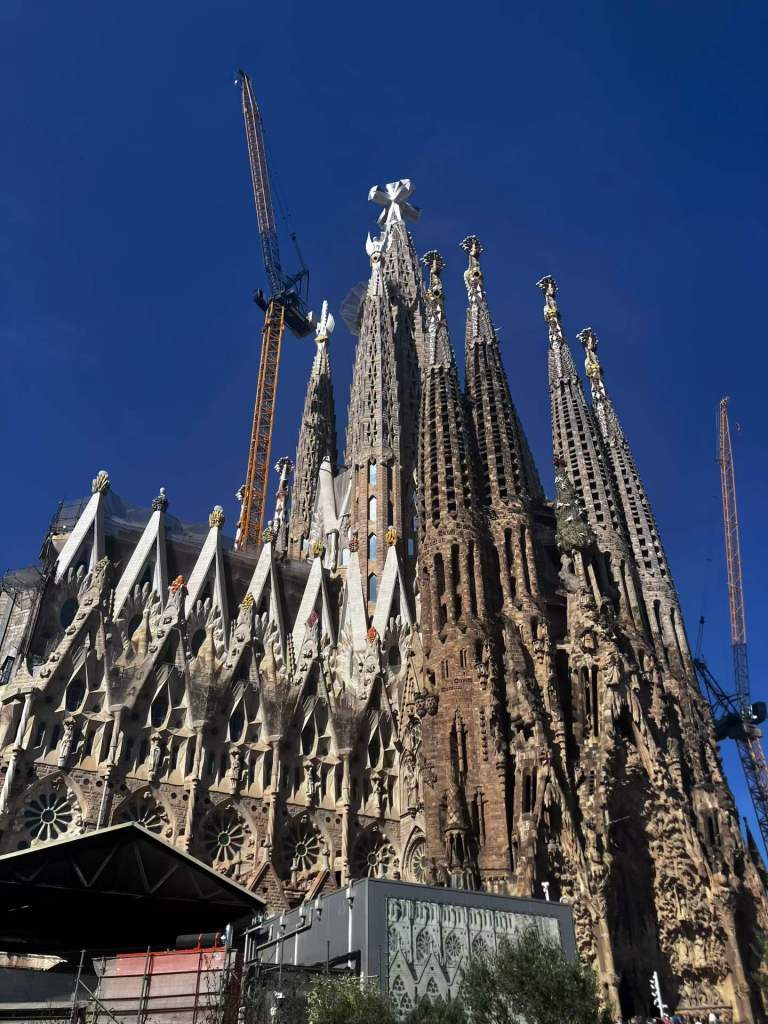
That distinction matters. Gaudí did not merely copy the appearance of nature. He tried to understand the structural logic by which natural forms develop. In this respect, his architecture has an intellectual dimension that photographs of colorful facades can easily conceal.
The same experimental approach appears in Park Güell, originally conceived as part of a residential development rather than simply as a public park. The commercial project did not succeed as planned, yet the resulting architecture became one of Barcelona’s most recognizable spaces. Curving surfaces, mosaics, columns, irregular forms, and buildings integrated into the hillside challenged the rigid geometries of conventional urban development.
Casa Batlló and Casa Milà, or La Pedrera, push the argument further. Their facades appear to move rather than remain fixed. Balconies resemble bones, stone behaves like waves, and rooftops become sculptural landscapes. What interests me about Gaudí is therefore not simply that his buildings are unusual. He asked a more fundamental question: Why must a building look like a box merely because generations of builders have made boxes?
That is also, in a broad sense, an entrepreneurial question. Innovation often begins when someone stops treating an inherited constraint as a natural law.
Marseille: Infrastructure, Religion, and the Mediterranean
In southern France, Marseille offered another kind of historical continuity. Founded by Greek settlers from Phocaea in antiquity, the city long predates the modern French state. Its identity has always been oriented toward the Mediterranean. Trade, migration, empire, North Africa, southern Europe, and the sea have shaped Marseille in ways that distinguish it sharply from Paris.
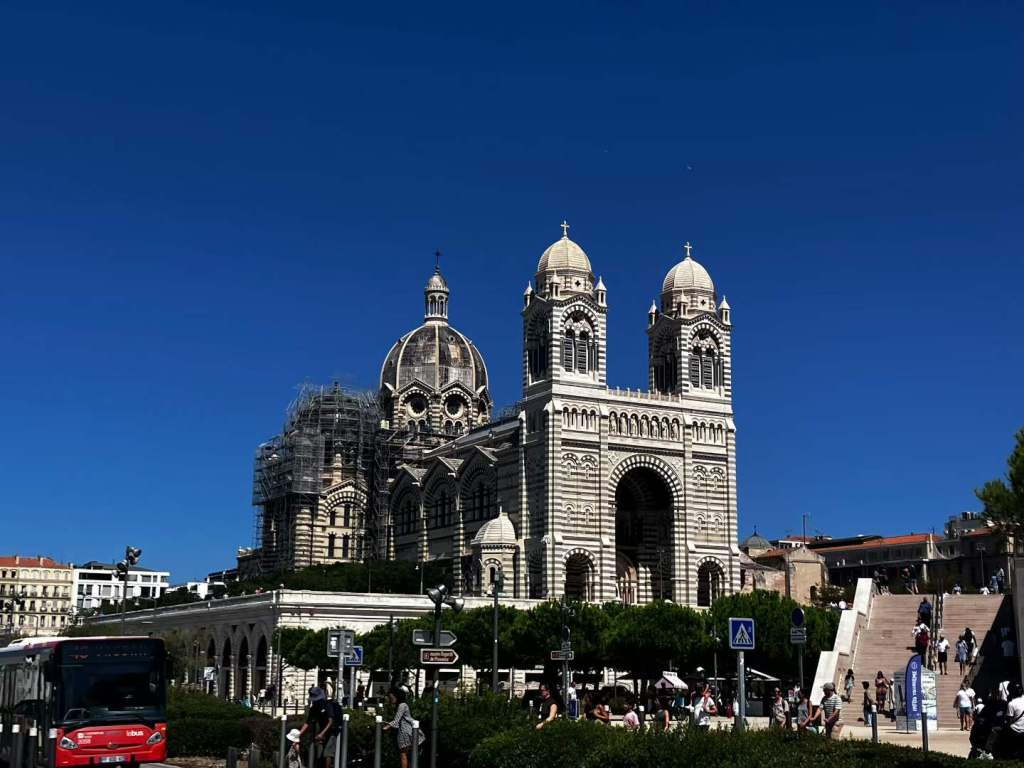
The city’s most visible religious landmark is Notre-Dame de la Garde, positioned high above Marseille. Its nineteenth-century architecture is best described as Romanesque-Byzantine Revival, rather than simply Byzantine. Domes, arches, mosaics, polychrome surfaces, and the monumental gilded statue of the Virgin draw consciously upon Byzantine and Romanesque visual traditions while belonging to a distinctly nineteenth-century French architectural context. From its elevated position, the basilica also makes Marseille’s relationship with the sea impossible to miss.
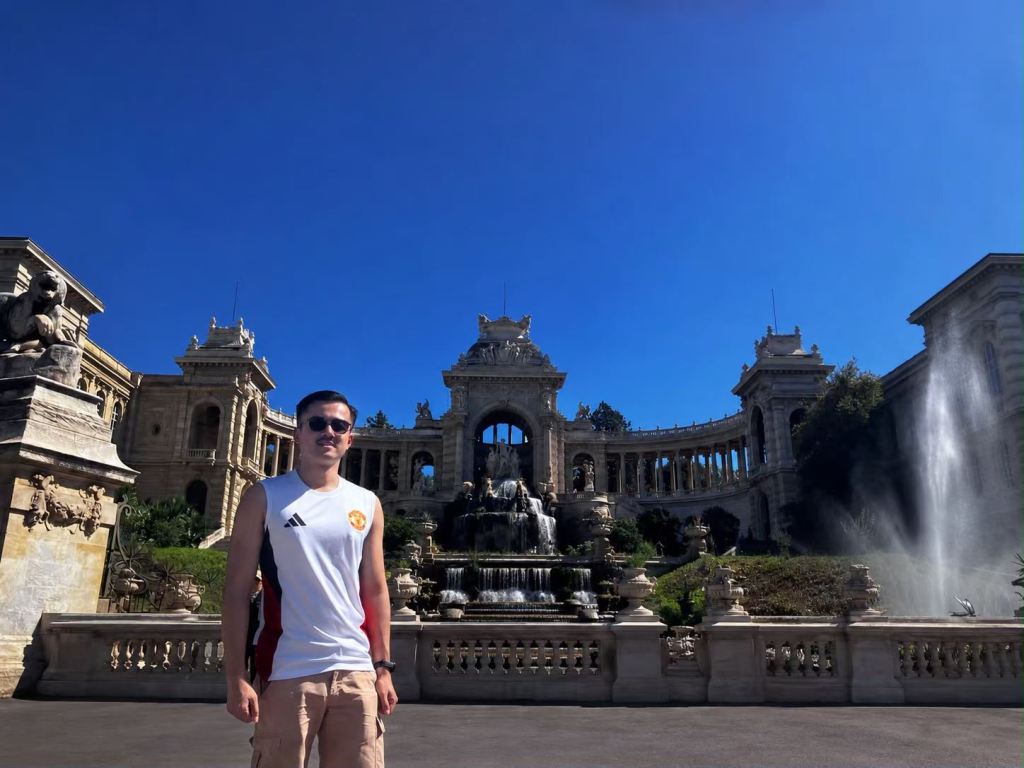
I was particularly interested in the Palais Longchamp, because its monumentality celebrates something more economically fundamental than royal power: urban water infrastructure. The complex commemorates the arrival of water from the Durance through a major canal project that transformed Marseille’s water supply. Its fountains, colonnades, museums, and monumental composition turn a public-works achievement into civic architecture. There is something admirable in the nineteenth-century confidence behind this idea. Infrastructure capable of improving public health and urban life was considered important enough to receive monumental architectural expression.
For anyone interested in political economy, the building raises useful questions about the relationship among infrastructure, institutions, public investment, and urban growth. A reliable water supply does not possess the glamour of a royal palace, but historically it may contribute far more to human welfare. Architecture can therefore reveal not only what a society believed to be beautiful but what it considered worthy of public commemoration.
Aix-en-Provence: Layers of Christianity and Art
At Aix-en-Provence, the Cathedral of Saint-Sauveur offered another example of a building that cannot be assigned neatly to one architectural period. Romanesque and Gothic elements coexist because the cathedral developed over centuries rather than emerging from a single unified plan. Such buildings are useful corrections to the modern preference for clean categories. Historical architecture is often the product of accumulation, repair, changing tastes, new patrons, and institutional continuity.
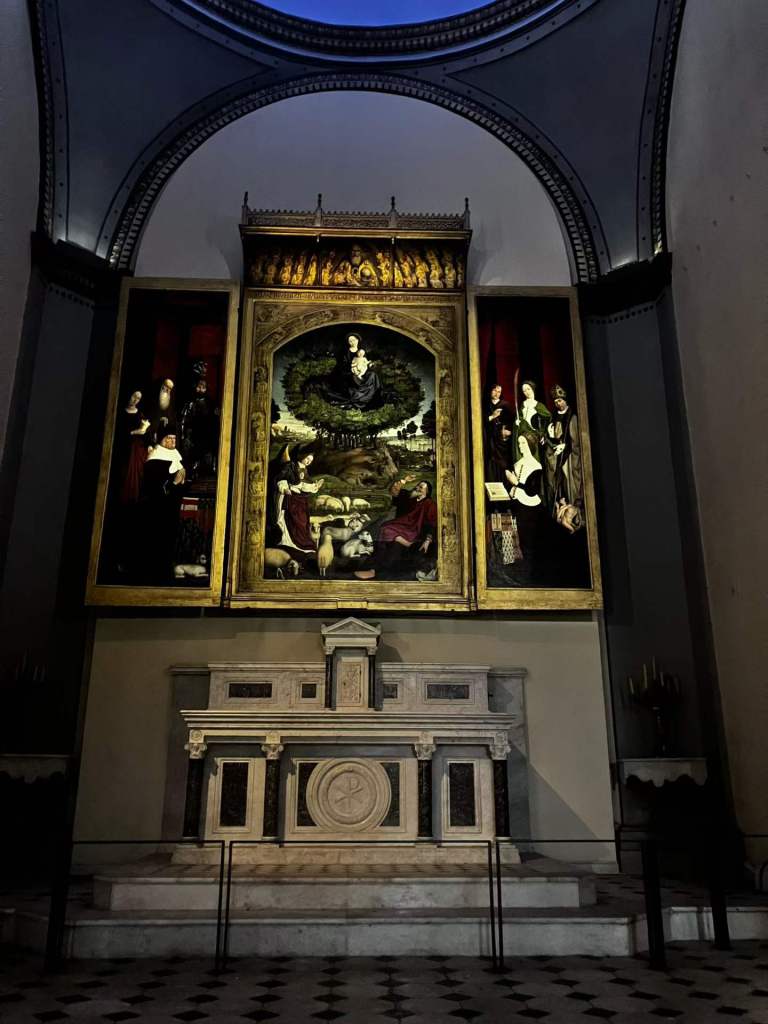
Among the works associated with the cathedral, the Burning Bush Triptych, attributed to Nicolas Froment, is particularly important. The work belongs to the late medieval and early Renaissance artistic environment of Provence and combines the biblical account of Moses and the burning bush with Christian Marian symbolism. Its significance lies partly in how biblical narrative, patronage, theology, and regional artistic traditions are compressed into a single object.
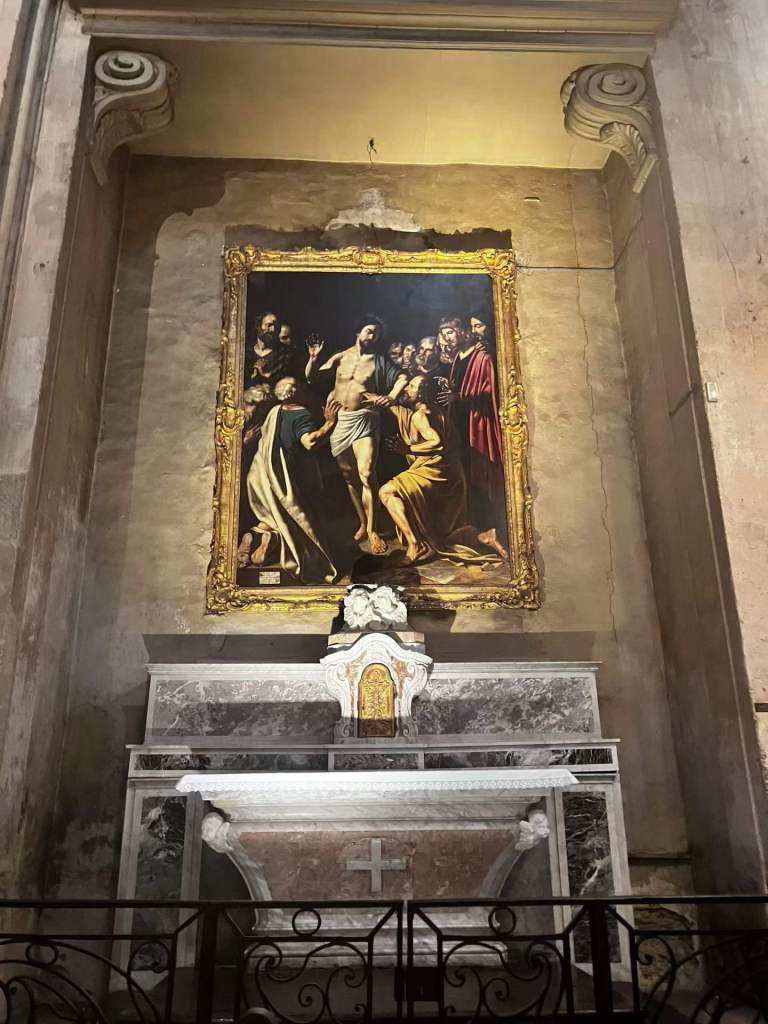
This also provided an opportunity to think about the long artistic history of the Doubting Thomas, in which the resurrected Christ allows Thomas to verify his wounds. The subject became especially powerful in later European painting, including Caravaggio’s famous treatment, because it confronts a basic tension between faith and empirical confirmation. Religious art therefore becomes intellectually interesting even beyond questions of belief: painters repeatedly used biblical narratives to investigate the body, evidence, doubt, suffering, and human psychology.
The Final Day: Milan, Gothic Christianity, Commerce, and Leonardo
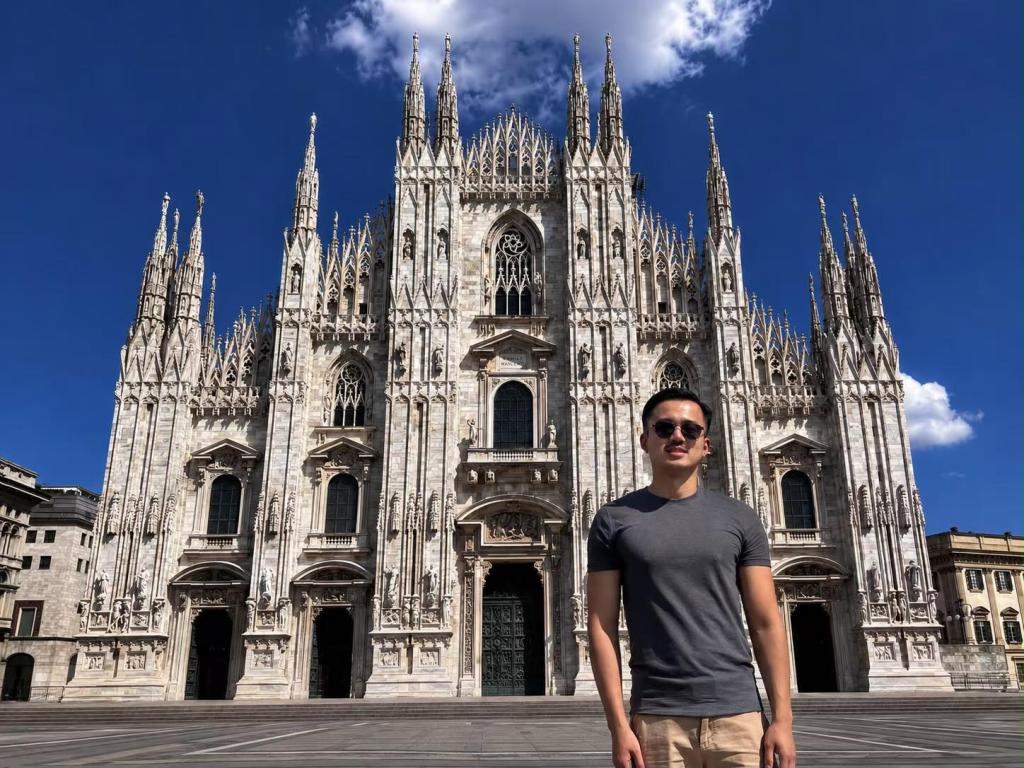
The final major city was Milan, whose historic center offers another extraordinary compression of European history. The dominant monument is naturally the Milan Cathedral, begun in the late fourteenth century and developed over several centuries. It is the largest Gothic cathedral in Italy and one of the largest church buildings in Europe. Its architecture combines northern Gothic structural ideas with the distinctive Italian use of marble and sculpture, producing a building whose extraordinary number of pinnacles and statues continually draws the eye upward.
Immediately beside the cathedral stands a building representing an entirely different kind of institution: the Galleria Vittorio Emanuele II. Constructed in the nineteenth century, the gallery combines iron and glass engineering with monumental historicist architecture. It is simultaneously a covered street, commercial space, urban monument, and symbol of the newly unified Italian nation. Its great glass dome and intersecting arcades demonstrate how industrial-era materials could be incorporated into an architectural language that still sought continuity with the classical European city.
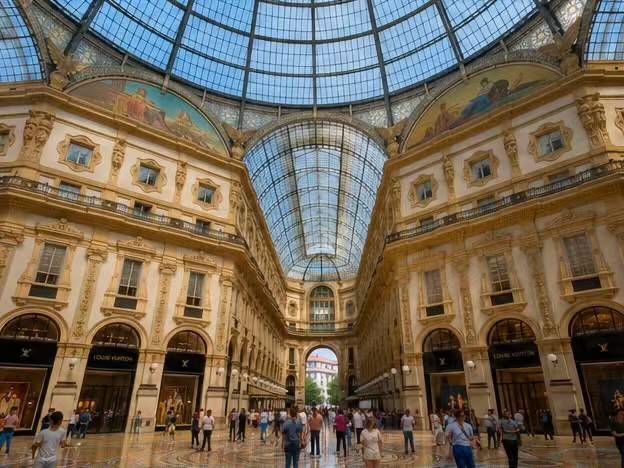
The allegorical decorations representing Europe, Asia, Africa, and the Americas, together with the famous floor mosaics, also reveal the worldview of the period. The nineteenth century was the age of nationalism, but it was simultaneously an age of rapidly expanding global commerce. Milan’s gallery therefore joined two developments that might initially appear contradictory: the consolidation of the nation-state and the expansion of international markets.
Nearby financial buildings tell another part of Milan’s story. The city eventually became Italy’s principal center of finance, industry, fashion, and corporate activity. Here again architecture can be read economically. The cathedral represents accumulated religious and civic resources over centuries; the gallery represents modern consumption and urban commerce; bank buildings represent the increasing institutional sophistication of finance. They coexist because modern capitalism did not emerge in an empty landscape. It developed inside cities already shaped by religious, political, and commercial institutions.
The other unavoidable presence in Milan is Leonardo da Vinci. His years at the Milanese court remind us how misleading modern professional categories can be when applied to the Renaissance. Leonardo was a painter, engineer, designer, investigator of anatomy, student of mechanics, and much else besides. The monument to him near Piazza della Scala therefore represents more than artistic celebrity; it recalls a period when the boundaries between art, science, engineering, and practical problem-solving were considerably more porous.
I did not see The Last Supper on this visit. Leonardo painted it for the refectory of Santa Maria delle Grazie, not for a conventional museum gallery, and that original setting remains essential to understanding the work. I instead left that part of Milan for another visit. There is no particular virtue in exhausting a city in one trip. Sometimes an unfinished itinerary is simply a reason to return.
What Remains After the Journey
Looking back, what interests me most is how naturally these places form a history of institutions. Sicily preserves the interaction of Greek and Roman civilizations. Pompeii preserves the economic and social life of an ordinary Roman city. Malta demonstrates the consequences of strategic geography. Genoa reveals how commerce, finance, maritime power, and urban self-government could flourish before the modern nation-state. Turin records dynastic government and national unification. Barcelona shows architectural entrepreneurship challenging inherited conventions. Marseille demonstrates the relationship between trade, geography, religion, and infrastructure. Milan places medieval Christianity, Renaissance creativity, nineteenth-century commerce, and modern capitalism almost side by side.
None of this means that history follows a simple progression from ancient civilization to modern capitalism. It clearly does not. Civilizations advance, stagnate, collapse, borrow from others, recover, and occasionally abandon institutional achievements that earlier generations had taken centuries to create. Political conquest can redirect development. New technologies can alter relative advantages. Trade routes can move. Religious institutions can accumulate or lose power. Entrepreneurs discover opportunities that governments and established organizations fail to anticipate. Historical outcomes emerge from the interaction of human agency with institutions and circumstances.
That is why Genoa remained particularly important to me after the journey. Columbus could not know what the Atlantic economy would eventually become. The merchants of Song China could not know that the first Industrial Revolution would take place centuries later on the opposite side of Eurasia. The inhabitants of Pompeii could not know that their ordinary homes would one day become evidence through which another civilization reconstructed Roman daily life. People make decisions with limited knowledge, while history is subsequently written with knowledge of outcomes they could never have possessed.
This is also why travel can complement the study of economic history and the history of ideas. Books allow us to identify causal arguments, compare institutions, and distinguish evidence from attractive stories. Visiting the places where those institutions developed adds another dimension. A medieval gate, a Renaissance church, a fortified harbor, an aqueduct monument, a stock exchange, and a nineteenth-century shopping arcade begin to look less like unrelated tourist attractions and more like material evidence of how societies solved different problems at different moments.
I returned from this journey without a simple conclusion about European history, and I regard that as a positive result. The more one sees, the harder it becomes to believe that civilizations develop according to a predetermined sequence. Geography matters, but geography is not destiny. Institutions matter, but institutions can change. Individual action matters, but no individual chooses the historical circumstances into which he is born. Economic development is therefore neither an automatic process nor the achievement of a single ruler, culture, or policy. It is the cumulative and often fragile result of knowledge, institutions, entrepreneurship, competition, political choices, and historical contingency.
Perhaps that is what remains with me most strongly after moving from the Alps to the Mediterranean. We travel through geographical space, but what we actually encounter is accumulated time.
Copyright Notice: This article is the intellectual property of its author. If you wish to reproduce or share it, you must clearly indicate the original source and provide proper attribution. Unauthorized copying or distribution without acknowledgment is strictly prohibited.
How to Cite this Article (APA 7th edition)
Wang, H. H. (2026, August 23). From the Alps to the Mediterranean: Cities, Institutions, and the Long Course of European History. https://williamhongsongwang.com/2026/08/23/from-the-alps-to-the-mediterranean-cities-institutions-and-the-long-course-of-european-history/


One thought on “From the Alps to the Mediterranean: Cities, Institutions, and the Long Course of European History”